AI SEO Strategies That Help Startups Parallelly Grow with Big Brands
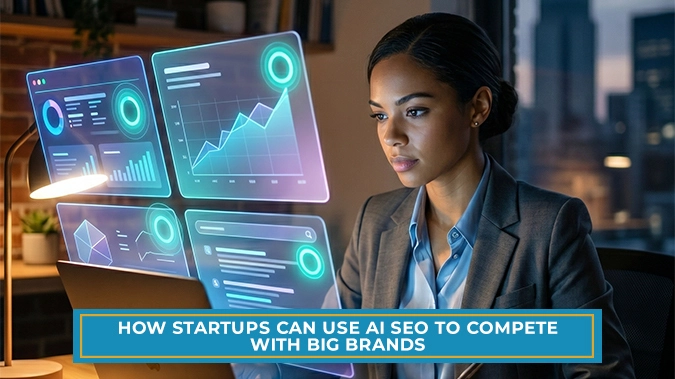
Startups often struggle to compete with big brands due to budget and authority gaps. AI SEO levels the playing field by enabling smarter keyword research, semantic content optimization, topical authority, and programmatic SEO. This guide explains actionable strategies, tools, and mistakes to avoid so startups can grow visibility and drive measurable results.
Overview:
AI SEO has leveled the playing field, allowing startups to compete with big brands without huge budgets. By combining strategic AI-driven practices with human oversight, startups can boost rankings, AI visibility, and organic growth in the coming years.
Key Strategies for Startups:
- Intent-Driven Keyword Research: Focus on high-impact keyword clusters that match user intent rather than generic terms.
- AI Content Optimization: Create content that covers topics comprehensively, leveraging semantic SEO and entity signals.
- Topical Authority Building: Develop interconnected content clusters to signal expertise and relevance to search engines.
- Programmatic SEO: Scale content efficiently across multiple pages without sacrificing quality.
- AI Technical SEO Tools: Optimize site speed, structure, crawlability, and fix technical issues quickly.
- Performance Monitoring: Track AI SEO metrics and KPIs to measure results and adjust strategies.
- Avoid Common Pitfalls: Don’t rely solely on AI content, ignore search intent, or skip technical audits.
Startups have always faced one major challenge, competing with brands that have bigger budgets, stronger authority, and massive content libraries. Ranking on search engines against them often feels like an uphill battle.
But in 2026 and beyond, something has shifted. AI-driven search and content systems are reshaping how visibility works, giving startups a real chance to compete. According to industry trends, AI-powered search adoption has grown significantly, changing how users discover brands and consume information.
The best thing about this is, you don’t need a massive budget anymore, you need a smart AI SEO strategy. In this blog post, we will explore how startups can use AI SEO to give competition to established brands.
Why Traditional SEO Is Hard For Startups
Before getting into solutions, it helps to look at why traditional SEO feels stacked against startups. The landscape naturally favors established brands with stronger authority, bigger budgets, and higher content output, making it tough for newer players to compete and gain visibility early on.
- Domain Authority Gap
Big brands have years of backlinks, trust signals, and authority. Startups are just getting started, making it harder to rank competitively.
- Budget Limitations
Enterprise companies invest heavily in SEO, content, and paid campaigns. Startups often need to work within tight budgets.
- Content Volume Challenges
Large companies publish content at scale. Startups struggle to match that volume consistently. This is exactly where AI changes the game.
How AI SEO Helps Startups Compete
AI SEO is not just about generating content, it is about working smarter, faster, and more strategically. This is how this modern technology has helped many startups to compete with established business:
AI Keyword Research
AI tools help identify not just keywords but intent clusters, groups of related queries users actually search for. This allows startups to target high-impact opportunities instead of chasing competitive keywords blindly.
AI Content Optimization
AI helps create content that covers topics in depth using semantic SEO and entity-based optimization. This improves relevance and increases chances of ranking across multiple variations of a query.
Topical Authority Building
Instead of writing random blogs, startups can use AI to build topic clusters that signal authority to search engines. This further leads to building better rankings and visibility.
Programmatic SEO
Startups can scale content creation using programmatic SEO, generating multiple pages efficiently for different keyword variations without compromising quality.
AI Technical SEO Tools
AI tools can quickly identify technical issues, optimize page speed, improve structure, and enhance crawlability, things that usually take weeks manually.
5 AI SEO Strategies Startups Should Implement
Here are practical strategies that can deliver real results:
- Build Topic Clusters, Not Just Blogs
Focus on creating interconnected content around a core topic. This strengthens authority and improves rankings across multiple queries.
- Focus on Search Intent Over Keywords
AI search prioritizes intent. Align your content with what users actually want, not just what they type.
- Optimize for AI Answers
Structure content with clear headings, FAQs, and concise answers. This improves visibility in AI-generated responses. You can explore the difference in depth through AEO vs traditional SEO to understand how answer engines are evolving.
- Leverage generative engine optimization strategies
GEO focuses on making your content more discoverable in AI-generated outputs. It ensures your brand gets mentioned, not just indexed.
- Combine SEO With Smart Distribution
Content alone is not enough. Pair it with performance marketing strategies to amplify reach and drive faster results.
Best AI SEO Tools For Startups
Using the right tools can significantly accelerate growth. Instead of doing everything manually, startups can use AI to save time, improve accuracy, and scale faster. Here’s a breakdown of the most effective categories with examples:
AI Keyword Research Tools
These tools go beyond basic keyword suggestions and help identify search intent, keyword clusters, and content opportunities.
- Tools like Ahrefs, SEMrush, and Ubersuggest use AI to analyze search trends, competition, and user intent.
- They help startups discover low-competition, high-impact keywords that are easier to rank for.
Content Optimization Platforms
These platforms ensure your content is aligned with what search engines and AI models prefer.
- Tools like Surfer SEO, Clearscope, and Frase analyze top-ranking pages and provide recommendations on structure, keywords, and readability.
- They help improve semantic SEO, content depth, and topical relevance.
Technical SEO Analyzers
Technical health plays a huge role in rankings, and AI tools make it easier to identify and fix issues quickly.
- The development of advanced tools like Screaming Frog, Sitebulb, and Google Search Console highlight issues such as broken links, slow page speed, and indexing errors.
- AI-powered insights help prioritize fixes that will have the maximum impact on performance.
AI writing assistants
These tools help generate content faster while maintaining structure and clarity.
- Tools like ChatGPT, Jasper, and Copy.ai assist in creating blogs, outlines, and drafts.
- When combined with human editing, they help produce high-quality, scalable content.
AI SEO Mistakes Startups Must Avoid
Even with AI-driven tools, startups often make common mistakes that limit results. Avoiding these pitfalls ensures your AI SEO strategy delivers measurable impact:
- Relying Solely on AI Content: Generating content without human oversight can lead to shallow or inaccurate articles. Always refine AI drafts to match audience intent.
- Ignoring Search Intent: AI content misses the nuances of user queries. Ensure your content answers real questions your target audience is asking.
- Skipping Technical SEO Checks: AI can optimize content but won’t fix crawl errors, site speed, or schema markup issues.
- Overlooking Topical Authority: Startups often produce scattered content. Focus on clusters and interlinking to build credibility.
- No Performance Tracking: Without tracking AI SEO KPIs, you would not know what’s working. Monitor rankings, AI recommendations, and engagement metrics.
Future of AI SEO for Startups
AI search is rapidly shifting from traditional keyword-based results to intent-driven, conversational answers, and this change is especially important for startups. As AI search engines become more dominant, simply ranking on Google would not be enough. Your brand needs to be understood, trusted, and recommended by AI systems. This is where entity SEO becomes crucial, helping search engines clearly identify your brand, services, and expertise. Startups that focus on building strong topical authority, structured content, and consistent brand signals will be better positioned to appear in AI-generated answers and stay competitive in an AI-first search ecosystem.
Real Growth Insight for Startups
One common question founders ask is: how long does this actually take?
The reality is, results vary based on strategy, competition, and execution. If you want clarity, this guide on How long does SEO take to show results gives a realistic timeline and expectations. To accelerate growth, startups should also combine AI SEO with proven SEO techniques to grow organic traffic.
Why Startups Choose Saletify for AI SEO Excellence
For startups aiming to leverage AI SEO effectively, partnering with the right agency can make all the difference. Saletify, one of the leading digital marketing agencies in Pune, specializes in helping startups achieve visibility and growth without the heavy budgets of big brands. Here’s how we support businesses in implementing AI-driven SEO strategies:
- Conduct AI-powered keyword research and intent analysis to uncover high-impact opportunities.
- Optimize content using semantic SEO and entity-based approaches to boost rankings and AI visibility.
- Build topical authority through strategic content clusters and interlinking for long-term credibility.
- Monitor AI SEO performance metrics and refine strategies for consistent results.
- Implement technical SEO improvements using advanced AI tools to enhance site health and crawlability.
Startups can compete effectively, scale faster, and generate measurable organic growth, by collaborating with a trusted SEO agency in Pune and search engine optimization company in Pune.
The Bottom Line
AI SEO has fundamentally changed the rules of the game. Startups no longer need to outspend big brands, they need to outsmart them. Startups can achieve visibility that was once out of reach, by leveraging AI-driven insights, focusing on intent, and building topical authority.
At Saletify, we help startups implement AI-driven SEO strategies that improve both search rankings and AI visibility. As digital marketing experts, we focus on building scalable growth systems, not just traffic.
Want to compete with big brands using AI SEO? Experts of SALETIFY help you discover how its startup SEO services can help you scale faster. Get a free AI SEO audit today and start building a strategy that actually delivers results.
FAQs:
- What is AI SEO for startups?
AI SEO uses artificial intelligence tools to optimize content, research keywords, and improve website visibility. It allows startups to compete with larger brands by focusing on intent, topical authority, and AI-driven recommendations. - How can AI SEO help a startup compete with big brands?
AI SEO helps startups target high-impact keywords, optimize content semantically, build topic clusters, and get recommended in AI-driven search results, leveling the visibility playing field without huge budgets. - Which AI SEO tools are best for startups?
Startups can use tools like Ahrefs, SEMrush, Surfer SEO, Clearscope, ChatGPT, Jasper, and Sitebulb for keyword research, content optimization, and technical SEO insights. - What mistakes should startups avoid in AI SEO?
Common pitfalls include relying solely on AI-generated content, ignoring search intent, skipping technical SEO, neglecting topic clusters, and not tracking AI SEO KPIs. - How long does it take for AI SEO to show results?
Results vary depending on competition, strategy, and execution. Typically, measurable improvements in rankings and AI recommendations take 3–6 months with consistent optimization. - What is topical authority, and why is it important?
Topical authority shows search engines that your brand is an expert in a subject. For startups, building topic clusters and interlinked content increases rankings and AI visibility. - Can AI SEO replace traditional SEO completely?
No. AI SEO complements traditional SEO techniques. A combined approach ensures content is optimized for both human users and AI-driven recommendations. - Why is entity SEO crucial for startups?
Entity SEO helps AI and search engines understand your brand, services, and relevance. This increases your chances of appearing in AI-generated answers and recommendation lists.