AI-Powered Performance Marketing Strategies That Deliver Better ROAS
Are your advertising campaigns generating clicks but failing to deliver quality leads? Is your marketing budget increasing while your returns remain unpredictable?
In today’s competitive digital landscape, businesses cannot depend only on manual campaign management, basic targeting, or traditional advertising methods. Customer behaviour changes constantly, competition is increasing, and advertising platforms are becoming more complex.
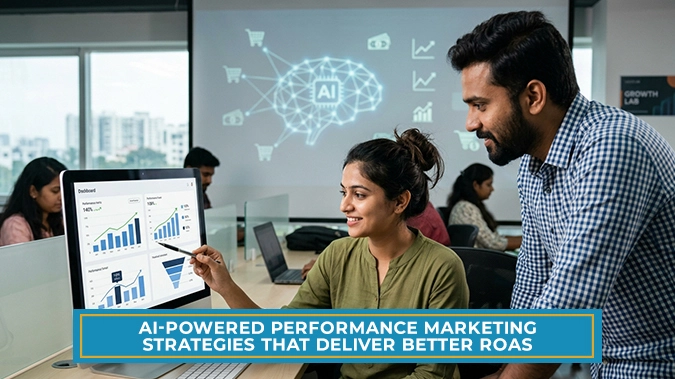
This is where AI-powered performance marketing is changing how businesses approach digital advertising. Artificial intelligence enables brands to analyse customer behaviour, predict buying patterns, optimise campaigns in real time, and make smarter budget decisions.
From Google Ads and Meta Ads to LinkedIn Ads, AI helps businesses move beyond assumptions and focus on measurable outcomes such as better Return on Ad Spend (ROAS), lower customer acquisition costs, and higher-quality conversions.
In this blog post, we will explore how adopting AI-driven advertising strategies has longer remained an innovation but become a competitive advantage.
What Is AI-Powered Performance Marketing?
AI-powered performance marketing combines artificial intelligence, machine learning, automation, and predictive analytics to improve the effectiveness of digital advertising campaigns.
Unlike traditional marketing approaches where teams manually analyse data and adjust campaigns periodically, AI continuously monitors thousands of performance signals, including:
- User behaviour
- Search intent
- Conversion patterns
- Audience engagement
- Campaign performance trends
Based on these insights, AI helps marketers make faster decisions about targeting, bidding, budget allocation, and creative optimisation.
Simply put, AI allows businesses to show the right message to the right audience at the right time while reducing unnecessary advertising spend.
Modern Performance Marketing Services with AI help brands create campaigns that are not only data-driven but also focused on generating profitable business outcomes.
Why ROAS Is the Most Important Performance Marketing Metric
For any business investing in advertising, the biggest question is simple:
“Is my marketing investment generating profitable returns?”
Return on Ad Spend (ROAS) answers this question by measuring how much revenue a business earns for every amount spent on advertising.
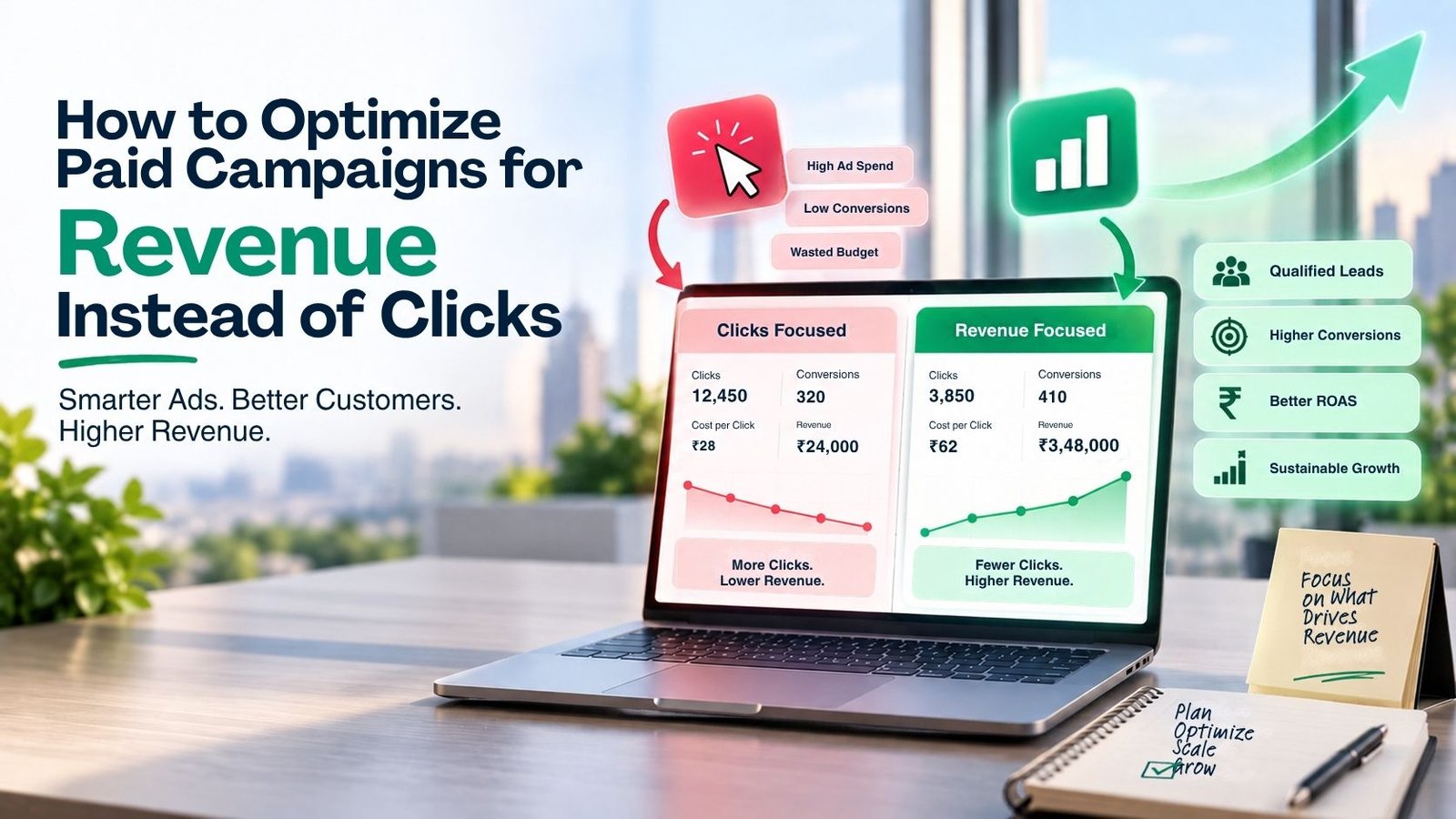
For example, if a company spends ₹50,000 on ads and generates ₹2,00,000 in revenue, the ROAS is 4X. However, successful performance marketing is not only about increasing revenue. Businesses must also monitor other metrics that determine campaign efficiency.
|
Metric |
What It Measures |
Business Impact |
|
ROAS |
Revenue generated from advertising spend |
Measures campaign profitability |
|
CAC |
Cost of acquiring a customer |
Helps control acquisition expenses |
|
CPA |
Cost per conversion |
Shows campaign efficiency |
|
CTR |
User engagement with ads |
Indicates ad relevance |
|
CVR |
Percentage of users converting |
Measures conversion effectiveness |
|
LTV |
Long-term customer value |
Supports sustainable growth |
AI improves ROAS by analysing campaign data faster and identifying opportunities that human teams can miss. It helps businesses optimize spending, improve targeting, and focus on audiences with higher conversion potential.
Top AI-Powered Performance Marketing Strategies That Improve ROAS
AI is transforming performance marketing by making campaigns more adaptive, personalised, and efficient. Here are some strategies businesses are using to improve advertising performance.
AI-Powered Audience Targeting
Finding the right audience has always been one of the biggest challenges in advertising. Reaching thousands of users does not guarantee results if those users are unlikely to convert.
AI solves this challenge by analyzing customer behaviour, interests, search patterns, and engagement signals to identify high-intent audiences.
For example, a SaaS company promoting business software can use AI to identify users actively researching similar solutions instead of targeting broad professional groups. This improves lead quality and reduces wasted ad spend.
Predictive Bidding for Smarter Ad Spend
Traditional bidding methods often depend on manual adjustments and historical performance. AI-powered bidding uses machine learning to predict which users are more likely to convert and automatically adjusts bids accordingly.
Platforms like Google Ads use smart bidding technology to evaluate multiple signals, including device, location, search behaviour, and conversion probability. This allows businesses to invest more in opportunities that have higher chances of generating revenue.
Automated Budget Allocation
Managing advertising budgets across multiple campaigns can be challenging. AI helps businesses identify which campaigns, audiences, and channels are delivering the best results.
Instead of distributing budgets equally, AI automatically prioritizes high-performing campaigns and reduces spending on areas with lower returns. This ensures marketing budgets are used more efficiently.
Dynamic Creative Optimization
Customers respond differently to different messages. AI helps businesses test and optimise various ad elements, including headlines, visuals, offers, and calls-to-action.
AI identifies which creative combinations generate better engagement and conversions, by analyzing performance patterns. This helps brands deliver more personalized advertising experiences without relying entirely on manual testing.
AI-Driven Keyword Optimization for Better Search Intent Targeting
Finding the right keywords has always been a critical part of successful advertising campaigns. However, traditional keyword selection often depends on historical data, manual research, and assumptions about customer behaviour.
AI-driven keyword optimization uses machine learning and search behaviour analysis to identify high-intent keywords that have a stronger possibility of driving conversions. It evaluates search patterns, user intent, competition levels, and past campaign performance to recommend keywords that align better with business goals.
This allows businesses to move beyond generating traffic and focus on attracting potential customers who are actively looking for their products or services. AI helps optimize ad spend and increase overall campaign profitability, by reducing irrelevant clicks and improving keyword accuracy.
Personalized Ad Experiences for Higher Customer Engagement
Customers today expect brands to deliver relevant experiences rather than generic advertisements. Showing the same message to every user can limit engagement and reduce conversion opportunities.
AI enables personalized ad experiences by analyzing user behaviour, browsing patterns, previous interactions, and purchase intent. Based on these insights, businesses can deliver customized advertisements, offers, and messaging that match different customer needs and buying stages.
For example, a visitor exploring a product page can see a different advertisement compared to a user who has already interacted with the brand multiple times. This level of personalization improves engagement, strengthens customer relationships, and increases the chances of conversion.
Cross-Channel Campaign Optimization for Unified Marketing Performance
Managing campaigns across multiple platforms such as Google Ads, Meta Ads, and LinkedIn Ads can become complex when each channel operates with separate strategies and performance data.
AI-powered cross-channel optimization helps businesses analyze customer interactions across different platforms and understand which channels contribute most effectively to conversions. It identifies performance patterns, adjusts budget distribution, and helps marketers create a connected customer journey.
Instead of evaluating each platform individually, AI provides a broader view of campaign performance and helps businesses make smarter decisions about where to invest their marketing budget. This leads to better resource utilization, improved attribution, and stronger ROAS across the entire advertising ecosystem.
How AI Improves Google Ads Performance
Google Ads has become increasingly competitive, with businesses bidding for the same audiences and keywords. AI helps advertisers move beyond manual optimization by analyzing massive amounts of data and making real-time decisions to improve campaign efficiency.
Google’s AI-powered features such as Performance Max and Smart Bidding help businesses optimize campaigns across multiple touchpoints, including Search, Display, YouTube, Gmail, and Maps.
Some key ways AI improves Google Ads performance include:
- Smart Bidding: AI evaluates conversion signals such as device, location, search behaviour, and user intent to adjust bids automatically and improve conversion opportunities.
- Performance Max Campaigns: AI identifies the best-performing combinations of audiences, creatives, and placements to maximize campaign results across Google’s advertising network.
- AI-Generated Assets: Businesses can create and test multiple ad variations to understand which messaging connects better with their target audience.
- Search Intent Analysis: AI helps identify what users are actually looking for, allowing businesses to target keywords with stronger buying intent.
For businesses investing in Google Ads Management Services, AI provides the advantage of faster optimization, better audience understanding, and improved control over advertising costs.
How AI Enhances Meta Ads Campaigns
Meta platforms have changed significantly from simple audience targeting to AI-powered campaign optimisation. Today, successful advertising depends less on manually selecting audiences and more on allowing AI to identify patterns that lead to conversions.
Features like Meta’s Advantage+ campaigns use artificial intelligence to analyze user behaviour, creative performance, and conversion data to improve campaign delivery.
AI improves Meta Ads performance through:
- Smarter Audience Discovery: AI identifies potential customers beyond predefined audience groups by analysing behaviour and engagement patterns.
- Creative Performance Analysis: It evaluates different images, videos, headlines, and messages to determine which combinations generate stronger responses.
- Conversion Optimisation: AI focuses ad delivery toward users who are more likely to complete desired actions, such as purchases, enquiries, or sign-ups.
- Lookalike Audience Enhancement: AI helps identify new prospects who share similarities with existing high-value customers.
For brands managing large advertising budgets, AI reduces guesswork and helps create campaigns that continuously improve based on real customer behaviour.
Common Performance Marketing Mistakes AI Can Solve
Many businesses invest heavily in digital advertising but still struggle to achieve consistent results. The problem is often not the budget but inefficient campaign management. AI helps solve several common performance marketing challenges:
|
Traditional Challenge |
How AI Helps |
|
Targeting the wrong audience |
Analyses behaviour and identifies high-intent customers |
|
Wasted advertising budget |
Automatically shifts spend towards better-performing campaigns |
|
Delayed campaign optimisation |
Provides real-time insights and adjustments |
|
Generic advertisements |
Creates personalised experiences based on user behaviour |
|
Limited performance visibility |
Uses advanced analytics for better decision-making |
|
Poor attribution tracking |
Connects customer interactions across multiple touchpoints |
For businesses struggling with low conversions despite traffic and advertising investments, adopting AI-driven strategies can help identify gaps and improve campaign efficiency. Businesses can also explore Better ROAS with More Leads strategies to understand how improved targeting and optimisation contribute to stronger marketing outcomes.
AI Performance Marketing for Different Industries
AI Performance Marketing is not limited to one industry. Businesses across sectors are using AI to improve customer acquisition and marketing efficiency.
E-commerce Businesses
AI helps e-commerce brands understand customer preferences, recommend products, optimize product advertisements, and improve purchase conversions.
SaaS Companies
For SaaS businesses, AI identifies high-intent prospects, improves lead scoring, and supports personalized campaigns that shorten the sales cycle.
Healthcare Businesses
AI enables healthcare brands to reach relevant audiences while maintaining better campaign targeting and improving patient acquisition strategies.
Real Estate Companies
AI helps real estate businesses identify potential buyers based on online behaviour, location preferences, and engagement patterns.
B2B Organisations
For B2B companies, AI improves account targeting, lead nurturing, and decision-maker engagement across platforms like LinkedIn and Google Ads.
Measuring Success: KPIs Every Business Should Track
AI can improve campaign performance, but businesses still need the right metrics to evaluate success. Measuring only clicks and impressions does not provide a complete picture of marketing effectiveness.
Important KPIs include:
- ROAS (Return on Ad Spend): Measures revenue generated from advertising investment.
- CPA (Cost Per Acquisition): Shows how much it costs to acquire a customer or lead.
- CAC (Customer Acquisition Cost): Helps understand the overall cost of gaining new customers.
- CTR (Click-Through Rate): Measures how effectively ads attract user attention.
- CVR (Conversion Rate): Shows how efficiently visitors become leads or customers.
- LTV (Customer Lifetime Value): Evaluates the long-term revenue potential of customers.
A successful AI marketing strategy focuses on improving business outcomes rather than chasing surface-level engagement metrics.
Future of AI in Performance Marketing
The future of performance marketing will move beyond campaign automation. AI will increasingly help businesses predict customer behaviour, create personalized experiences, and make autonomous marketing decisions. Some emerging trends include:
Predictive Marketing
AI will help businesses anticipate customer needs before they actively search for solutions, enabling proactive marketing strategies.
Autonomous Campaign Management
AI systems will increasingly manage campaign adjustments, budget distribution, and optimization with minimal manual involvement.
AI Marketing Agents
AI-powered agents will assist marketers by analyzing data, suggesting strategies, and automating repetitive marketing activities.
Privacy-First Advertising
As third-party cookies decline, AI will help businesses make better use of first-party data while maintaining customer privacy.
Generative AI in Advertising
AI-generated content, creatives, and personalized messaging will help brands deliver faster and more relevant advertising experiences.
Businesses that adopt AI early will have a stronger advantage because future marketing success will depend on how effectively brands use data, automation, and intelligence.
The Bottom Line
AI-powered performance marketing is changing how businesses approach digital advertising. It enables smarter targeting, faster optimization, personalized customer experiences, and improved ROAS across platforms like Google Ads, Meta Ads, and LinkedIn Ads.
However, AI is not a replacement for marketing strategy. It works best when combined with strong business goals, creative thinking, accurate data, and continuous optimization.
For businesses aiming to scale in a competitive digital environment, investing in AI-driven advertising strategies can help reduce acquisition costs, improve campaign efficiency, and create sustainable growth.
Ready to maximize your advertising ROI with AI?
Partner with Saletify Marketing to implement AI-powered performance marketing strategies that optimize campaigns, reduce acquisition costs, and generate qualified leads across Google Ads, Meta Ads, LinkedIn Ads, and other digital platforms.
Connect with our experts today for a personalized performance marketing strategy designed around your business goals.
FAQs:
- What is AI-powered performance marketing?
AI-powered performance marketing uses artificial intelligence and automation to optimize digital advertising campaigns, improve targeting, reduce wasted spend, and increase measurable results like leads, sales, and ROAS.
- How does AI improve ROAS?
AI improves ROAS by identifying high-value audiences, optimizing bids, improving ad creatives, and automatically allocating budgets toward campaigns that generate better returns.
- Can AI optimize Google Ads automatically?
Yes. Google Ads uses AI-powered features like Smart Bidding and Performance Max to analyze data, adjust bids, and improve campaign performance based on conversion opportunities.
- How does AI improve Meta Ads performance?
AI improves Meta Ads by analyzing user behaviour, discovering valuable audiences, testing creatives, and optimizing ad delivery toward users more likely to convert.
- What is the difference between traditional and AI-powered performance marketing?
Traditional marketing relies heavily on manual analysis and adjustments, while AI-powered marketing uses real-time data analysis, automation, and predictive insights to improve campaign decisions.
- Is AI performance marketing suitable for small businesses?
Yes. Small businesses can use AI-powered advertising to improve targeting, reduce unnecessary spending, and compete more effectively without requiring large marketing teams.
- Which industries benefit the most from AI-powered advertising?
E-commerce, SaaS, healthcare, real estate, education, and B2B companies can benefit from AI advertising by improving customer targeting, lead generation, and conversion efficiency.
- How can businesses measure AI marketing success?
Businesses should track metrics such as ROAS, CPA, CAC, conversion rate, customer lifetime value, and revenue growth to evaluate AI marketing performance.