
Why Your Website Visitors Aren’t Becoming Leads in 2026
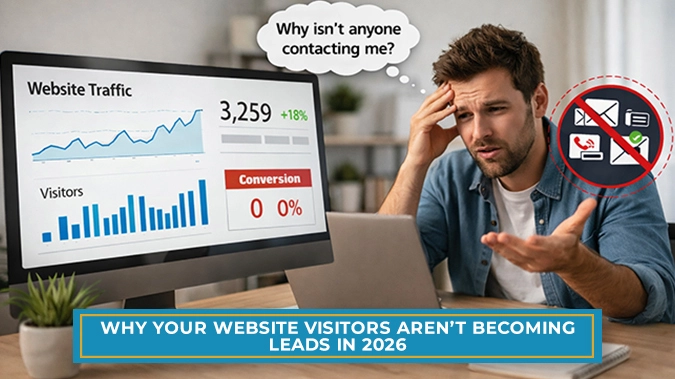
Website visitors often fail to convert in 2026 due to mismatched audience targeting, unclear value propositions, poor user experience, and weak conversion strategies. Fixing these issues requires a focus on CRO, trust signals, and structured funnels. This guide explains why traffic doesn’t turn into leads and how to optimize your website for better conversions and measurable growth.
Overview:
In 2026, website visitors will not convert due to gaps in targeting, messaging, user experience, and lack of a clear conversion strategy rather than traffic issues.
Key actions to convert website visitors into leads:
- Focus on audience targeting to attract high-intent visitors
- Strengthen your value proposition to clearly communicate benefits
- Improve website UX and speed for seamless user experience
- Make visitors to take action with clear and persuasive CTAs
- Build trust signals like testimonials and case studies
- Implement a conversion funnel strategy with lead magnets and retargeting
- Track key metrics like conversion rate, engagement, and lead quality
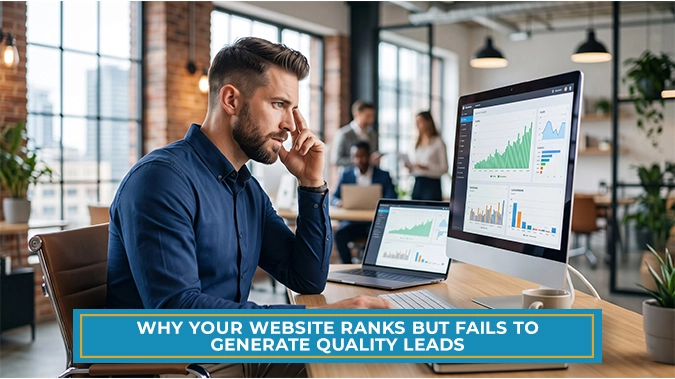
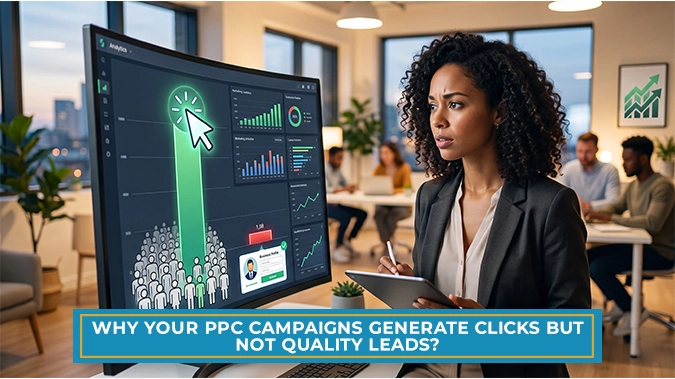
You are getting traffic. Your analytics dashboard looks active. Pages are being visited, clicks are happening, but the leads? Not measurable. This might sound familiar, isn’t it? In 2026, one of the biggest challenges businesses face is not attracting visitors, but converting them. The real question is no longer how to get traffic, but why your website visitors don’t convert.
The truth is simple. Traffic without conversion is just noise. Growth happens when visitors take actions, such as sign up, enquire, book a demo, or make a purchase. This blog breaks down what is actually going wrong and how to fix it with practical and real-world insights.
What is the Key Difference Between Traffic and Conversion
For years, businesses focused heavily on increasing website traffic. But in today’s digital landscape, traffic alone has lost its meaning. You can have thousands of visitors and still struggle with zero leads.
Why? Because user expectations have evolved. Visitors now demand clarity, speed, trust, and relevance within seconds. If your website doesn’t meet these expectations instantly, they leave often without a second thought. This shift has made website conversion rate optimization the real growth driver. Businesses that focus on conversions, not just traffic, are the ones scaling sustainably.
7 Reasons Your Website Visitors Are Not Converting
Here are the following things which helps website visitors to take actions:
1. Wrong Audience Targeting
Not all traffic is good traffic. If your visitors are not aligned with your offering, they would not convert, no matter how optimized your website is. These days businesses are chasing for volume instead of relevance. For example, ranking for broad keywords can bring visitors, but if those users are not decision-makers or buyers, conversions will remain low. This is where refined lead generation strategies matter, bringing in the right audience, not just more people.
2. Weak Value Proposition
When a visitor lands on your website, they’re asking one simple question: “Why should I choose you?” If your content in the website is too generic then individuals might not stay long to understand your key offerings. A strong value proposition should instantly communicate, like:
- What you offer
- Who it is for
- Why it is better
Without this clarity, even high-quality traffic would not convert.
3. Poor Website User Experience
User experience is often the silent conversion killer. Slow loading pages, confusing navigation, or cluttered layouts make users leave the page quickly. In a mobile-first world like India, poor mobile optimization alone can cost you a significant number of leads.
Good UX is not about design alone, it is about making the user journey effortless. This is where conversion rate optimization services play a crucial role in identifying and fixing friction points.
4. No Clear Call-To-Action (CTA)
You would be surprised how many websites fail at this basic step. If your visitors don’t know what to do next, they simply leave. Whether it is “Book a Demo,” “Get a Quote,” or “Download Now,” your CTA should be:
- Visible
- Action-driven
- Placed strategically
5. Lack of Trust Signals
In 2026, trust is everything. Nowadays, visitors have become more cautious. They look for proof before taking action. If your website lacks testimonials, reviews, certifications, or case studies, users mostly hesitate to build trust. In addition, credibility elements such as client logos, success stories, and real results can significantly improve conversions and reduce hesitation.
6. Slow Website Speed
Speed is no longer optional. Slow website speed can hamper SEO as well as conversion rates. If your website takes more than a few seconds to load, users drop off before even seeing your offer. Tools like Google PageSpeed Insights can help identify performance issues. A faster website plays an important role in improving rankings and keeping users engaged long enough to convert.
7. No Conversion Funnel Strategy
Many websites treat every visitor the same but users are at different stages of decision-making. Some are exploring, some are comparing, and some are ready to buy. Without a structured funnel, like lead magnets, email nurturing, or retargeting, you lose potential leads. A thoughtfully designed funnel, backed by content marketing, helps guide visitors smoothly toward taking action.
Key Metrics You Should Track Instead of Just Traffic
If you are only tracking visitors, you are missing the bigger picture. Tracking these digital marketing KPIs can give you a clearer understanding of what is working and what needs improvement. Here are the metrics that mainly matters:
- Conversion Rate: It showcases the percentage of visitors taking action.
- Bounce Rate: It delivers the number of users leaving without interaction.
- Engagement Rate: It tells the total time spent by the user and the interaction level
- Lead Quality: It says whether your leads are relevant and ready to convert or not.
How to Turn Website Visitors into Leads
Improving conversions is not about one big change, It is about fixing multiple small gaps across your website. Applying proven conversion rate optimization techniques can significantly improve your website’s performance over time. Here’ are points that could turn your website visitors into organic leads:
- Improve Your Messaging
Make your value proposition clear, specific, and benefit-driven. Speak directly to your target audience’s pain points.
- Optimize User Experience
Simplify navigation, improve mobile responsiveness, and ensure fast loading speeds. A seamless experience keeps users engaged.
- Use Smart CTAs
Place CTAs strategically across pages. Test different variations to see what drives more clicks.
- Build Trust
Add testimonials, case studies, and real-world results. Social proof reassures users that they’re making the right choice.
- Implement Funnel Strategy
Use lead magnets, email marketing, and retargeting to nurture visitors who are not ready to convert immediately.
How Saletify Helps Improve Website Conversions
At Saletify, the focus is not just on traffic only. It is about results. As a growth-driven digital marketing agency in Pune, Saletify helps businesses identify why their traffic is not converting and implements strategies that drive measurable outcomes.
Their approach includes:
- Data-driven CRO strategies
- SEO plus CRO integration for better targeting
- Advanced performance marketing services to drive qualified traffic
- Continuous optimization based on real-time data
Whether you are a startup or an established brand, Saletify ensures your website becomes a lead-generation engine, not just a digital presence.
The Bottom Line
Getting traffic is only half the job done. The real growth lies in turning that traffic into leads and customers. In 2026, businesses that focus on user experience, trust, and conversion strategy will outperform those chasing variety metrics. Your website can start delivering the results you expect by identifying genuine flaws and applying right optimizations.
Not getting leads from your website? Get a free website conversion audit from Saletify. Work with a trusted SEO Company in Pune and improve your lead generation with a results-driven strategy today.
FAQs:
- Why is my website getting traffic but no leads?
This usually happens due to poor targeting, weak messaging, or lack of a clear conversion strategy. Visitors may not find your offer relevant or compelling enough to take action.
- What is website conversion rate optimization?
It is the process of improving your website to increase the percentage of visitors who take desired actions like filling forms or making purchases.
- How can I increase website conversions?
Focus on improving user experience, strengthening your value proposition, adding trust signals, and using effective CTAs.
- What are the most important conversion metrics?
Conversion rate, bounce rate, engagement rate, and lead quality are key metrics to track website performance.
- How long does it take to improve website conversions?
It depends on your current setup, but with consistent optimization and the right strategy, improvements can be seen within a few weeks to months.