
Why Do Your PPC Campaigns Generate Clicks but Not Quality Leads?
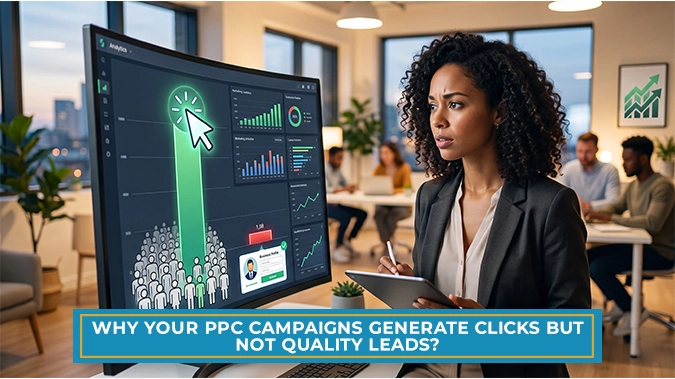
Do you experience this? Your dashboard looks busy. Traffic is coming in. However, the sales team still asking the same question, “Where are the good leads?”
Today, this has become one of the most frustrating PPC problems for modern businesses. You can spend thousands on Google Ads or Meta Ads and still end up with enquiries that have little buying intent, incomplete forms, irrelevant requests, or prospects who never respond.
Here, the problem is not always traffic. It is often a gap analysis between what you are paying for and the business outcome you actually want. In this blogpost of SALETIFY, we will understand how effective PPC lead generation is not always about getting more clicks. Rather it is all about the right audience, matching their intent, giving them a relevant offer, and measuring what happens after they convert.
Why Clicks Don't Always Mean Quality Leads
A click only tells you that someone interacted with your advertisement. It does not tell you whether that person needs your product, can afford it, fits your target market, or is ready to buy.
Think of the PPC funnel this way:
Click → Enquiry → Qualified Lead → Sales Opportunity → Customer → Revenue
If your campaigns generate 500 clicks but only two relevant enquiries, increasing the click volume will not solve the problem.
Quality PPC leads depend on search intent, targeting, messaging, landing page experience, conversion tracking, and lead qualification working together.
10 Reasons Your PPC Campaigns Generate Clicks but Poor Leads
1. Targeting the Wrong Keywords
The keywords that bring traffic to your website do not always represent genuine buying intent. For example, a B2B software company selling enterprise solutions could attract irrelevant traffic by targeting broad terms such as “business software” or “software tools.”
So, all you need is to build your PPC keyword strategy around commercial and high-intent searches and separate keywords based on user intent.
2. Using Broad or Low-Intent Search Terms
Not every search related to your product deserves your advertising budget. Informational sear ches, free-resource queries, job searches, and people simply researching a topic can generate clicks without generating customers.
Therefore, always review actual search terms regularly and prioritize queries that indicate a clear need, solution, location, or purchase intent.
3. Your Ad Copy Does Not Match Search Intent
A person clicks an ad because they expect it to solve a specific problem. If the landing page or offer does not match that expectation, the conversion opportunity quickly disappears.
Your ad should clearly communicate:
- What you offer
- Who it is for
- What makes it different
- What the user should do next
Because a strong message match creates a smoother path from click to conversion.
4. Poor Audience Targeting
Even a well-written advertisement will struggle if it reaches the wrong people. Location, demographics, interests, previous interactions, customer lists, and behavioural signals can all influence lead quality depending on the platform and campaign type.
5. Your landing Page is Not Built to Convert
Getting someone to click is only half the job. The landing page has to convince them to take the next step.
Common problems include:
- Slow loading pages
- Weak headlines
- Too much information
- Unclear CTAs
- Complicated forms
- Poor mobile experience
- Missing trust signals
Always focus on making the landing page a direct continuation of the advertisement. This makes visitor understand what you offer immediately and why they should act.
6. Your Offer Is Too Weak
Sometimes the campaign is not the problem. But the offer is. Using the CTA button as “Contact US” is not always compelling to someone who is still evaluating options. Depending on your business, stronger offers could include a consultation, quote, demo, audit, assessment, product trail, or relevant resource.
The easier is to understand the value of taking the next step, the stronger the conversion opportunity.
7. Conversion Tracking Is Incorrect
If your tracking counts every form submission, page visit, or button click as a successful conversion, your PPC platform may learn from the wrong signals.
That can lead automated bidding and optimization systems towards actions that look successful in the dashboard but have little value to your sales team.
Track meaningful conversions and, where possible, connect advertising data with qualified leads and revenue outcomes.
8. You Are Ignoring Negative Keywords
Negative keywords stop your ads from showing for irrelevant searches.
Without regular negative keyword management, businesses can continue paying for searches that have little or no commercial value. Therefore, reviewing search-term reports and continuously identifying irrelevant queries that should be excluded.
9. Your Mobile Experience Is Poor
A large portion of paid traffic can come from mobile devices. If your page is slow, difficult to navigate, or requires too much effort to submit a form, potential leads may leave before converting. In this case, you need to test your complete mobile journey from ad click to form submission.
10. You Are Optimizing for Clicks Instead of Business Outcomes
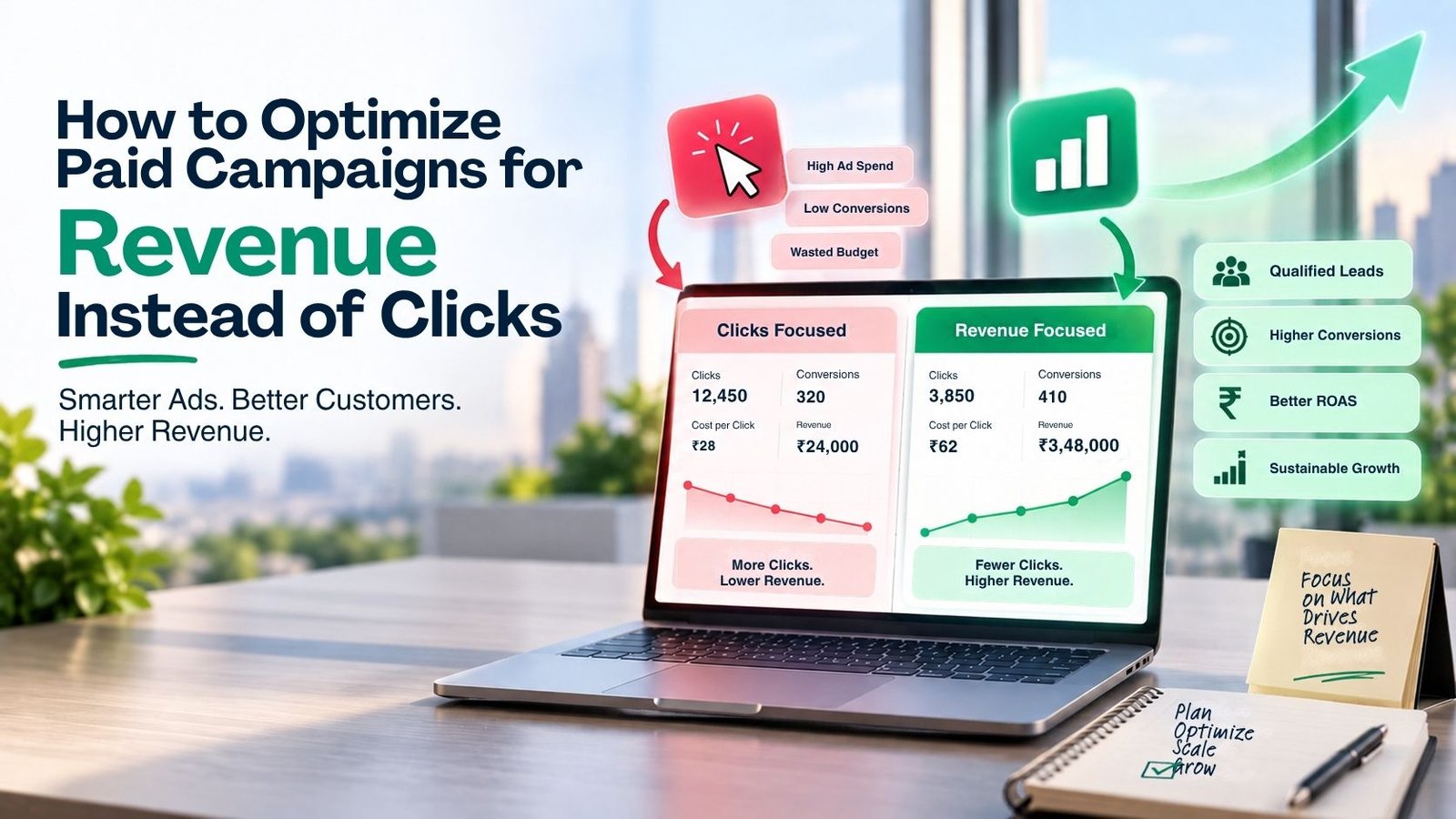
This is perhaps the biggest issue. A campaign can have an impressive CTR and still fail commercially.
Your real performance indicators should include:
Qualified leads → Cost per qualified lead → Sales opportunities → Customers → Revenue
When PPC campaign management is tied to these outcomes, optimization decisions become far more meaningful.
How to Improve PPC Lead Quality
Improving lead quality requires more than changing bids. You need to optimise the entire journey from search to sale.
Start with this framework:
- Identify high-intent keywords based on your ideal customer's search behaviour.
- Refine audience targeting to focus on relevant prospects.
- Rewrite ad messaging around specific problems and outcomes.
- Use negative keywords to eliminate irrelevant traffic.
- Optimize landing pages for relevance, speed, trust, and conversion.
- Use qualification questions when appropriate to filter low-intent enquiries.
- Track qualified leads, not just form submissions.
- Feed meaningful conversion data back into your campaigns.
Saletify Marketing approaches PPC optimization with this broader performance view, helping businesses connect advertising activity with lead quality, conversion rate optimization, and measurable business outcomes.
How Google Ads Optimization Can Reduce Wasted Ad Spend
Google Ads optimization is not simply about lowering CPC. The goal is to make every part of the campaign work towards a valuable conversion.
Tools and features such as Smart Bidding, Performance Max, Quality Score, search-term insights, audience signals, and conversion data can support campaign optimization when they are backed by accurate data and the right strategy.
For example, if a campaign consistently generates conversions from certain searches, audiences, or locations, those signals can help guide future optimization. But automation is only as useful as the signals behind it.
Poor conversion data + automation = poor optimization at scale.
That is why conversion tracking, keyword strategy, audience refinement, and ongoing campaign analysis remain essential.
How AI Can Improve PPC Lead Generation
AI is making PPC campaign optimization faster and more data-driven. AI-powered PPC optimization can help businesses analyse patterns, identify valuable audiences, automate bidding decisions, test creative variations, and allocate budgets based on campaign performance.
For example, AI can help identify behavioural signals associated with higher conversion probability and use those insights to support bidding and audience decisions.
AI can also assist with:
- Predictive audience targeting
- Automated bidding
- Creative testing
- Budget allocation
- Search intent analysis
- Conversion prediction
- Cross-channel optimization
However, AI does not replace strategy. Businesses still need clear goals, accurate conversion data, strong messaging, and human oversight.
PPC Landing Page Optimization for Better Lead Quality
A great PPC campaign can still lose valuable prospects if the landing page fails to deliver on the ad's promise.
Focus on five essentials:
- Message Match: Keep the landing page aligned with the ad.
- Clear CTA: Tell visitors exactly what to do next.
- Trust Signals: Use reviews, credentials, case studies, guarantees, or relevant proof where appropriate.
- Simple Forms: Ask only for information you genuinely need.
- Mobile Experience: Make the page fast, readable, and easy to use on smaller screens.
The objective is simple: remove friction between the visitor's intent and the action you want them to take.
PPC Metrics You Should Track Beyond Clicks
Clicks and CTR are useful, but they do not tell the complete business story.
|
Metric |
What It Tells You |
|
CTR |
How well your ad attracts attention |
|
CPC |
What you pay for each click |
|
Conversion Rate |
How effectively traffic converts |
|
CPA |
Cost of generating a conversion |
|
Qualified Lead Rate |
How many conversions meet your ideal criteria |
|
CAC |
Cost of acquiring a customer |
|
ROAS |
Revenue generated against advertising spend |
|
Lead-to-Customer Rate |
How effectively leads become customers |
The most valuable PPC report is not the one with the most clicks. It is the one that connects ad spend to qualified opportunities and revenue.
DIY PPC vs Professional PPC Management
|
Area |
DIY PPC Management |
Professional PPC Management |
|
Strategy |
Often campaign-focused |
Business-goal focused |
|
Targeting |
Basic or limited |
Continuous refinement |
|
Optimization |
Periodic |
Ongoing |
|
Tracking |
May focus on clicks |
Focuses on meaningful conversions |
|
Testing |
Limited by time |
Structured testing |
|
Reporting |
Platform metrics |
Business and ROI metrics |
|
Scalability |
Can become difficult |
Built for growth |
For businesses already spending significantly on paid advertising, professional PPC Management Services in Pune can help bring greater structure, testing discipline, and accountability to campaign performance.
When Should You Hire a PPC Management Agency?
Consider professional PPC support when:
- Your ad spend is increasing but leads are not.
- Sales teams complain about poor lead quality.
- CPCs are rising without stronger conversions.
- Campaign performance is inconsistent.
- You are unsure which keywords are wasting money.
- Conversion tracking is unclear.
- Your team does not have time for continuous optimization.
- You want to scale campaigns without scaling wasted spend.
Saletify Marketing combines PPC campaign management, conversion optimization, audience targeting, and performance marketing services to help businesses turn paid traffic into more valuable opportunities.
How to Build a PPC Campaign Focused on Qualified Leads
A quality-focused PPC campaign should follow a clear path:
- Define the Ideal Customer
Know who you want to acquire before deciding who to target.
- Map Search Intent
Separate high-intent searches from research-driven or irrelevant queries.
- Build Focused Campaigns
Group keywords, audiences, and offers logically.
- Create Relevant Ads
Match your message to what the prospect is actively looking for.
- Build Conversion-Focused Landing Pages
Make the next step obvious and frictionless.
- Track Meaningful Conversions
Measure qualified enquiries and business outcomes.
- Optimize Continuously
Review search terms, audiences, bids, creative, landing pages, and conversion data.
- Scale What Actually Works
Increase investment in campaigns that consistently generate quality opportunities, not simply cheap clicks.
Endnote
If your PPC campaigns are generating clicks but not quality leads, the answer is not necessarily “spend more.” It may be the other side that you need to look. Your keywords, audience targeting, ad messaging, landing pages, conversion tracking, bidding strategy, and optimization process all influence what you get from every advertising rupee.
The real objective of PPC is not traffic. It is a profitable customer acquisition. With the right PPC campaign management strategy, businesses can reduce wasted spend, improve lead quality, strengthen conversion rates, and make advertising investment more accountable to revenue.
Ready to stop paying for clicks that go nowhere?
Let Saletify Marketing analyse your PPC campaigns, identify wasted ad spend, refine targeting and conversion tracking, and build a strategy focused on generating better-quality leads.
Contact our PPC experts today for a customized campaign consultation.
FAQs:
- Why are my PPC campaigns getting clicks but no leads?
Usually, the problem is poor keyword intent, irrelevant targeting, weak ad messaging, or a landing page that does not convert. Incorrect conversion tracking can also hide the real issue.
- Why are my Google Ads leads low quality?
Your campaigns may be targeting broad or low-intent searches, reaching the wrong audiences, or optimizing for conversions that do not represent genuine sales opportunities.
- How do I reduce wasted PPC ad spend?
Regularly review search terms, exclude irrelevant queries, refine targeting, improve conversion tracking, and shift budget toward campaigns and audiences that generate valuable leads.
- How can PPC generate more qualified leads?
PPC generates better leads when targeting, messaging, landing pages, conversion tracking, and lead qualification are aligned with your ideal customer and business goals.
- How does landing page optimization improve PPC?
A relevant, fast, mobile-friendly landing page with a clear offer, strong CTA, and trust signals can reduce friction and make it easier for high-intent visitors to convert.
- Can AI improve PPC lead generation?
Yes. AI can support bidding, audience analysis, creative testing, budget allocation, and campaign optimization. However, strong strategy and accurate conversion data are still essential.
- What PPC metrics should businesses track?
Track CTR and CPC alongside conversion rate, CPA, qualified lead rate, CAC, ROAS, lead-to-customer rate, and revenue generated to understand true campaign performance.